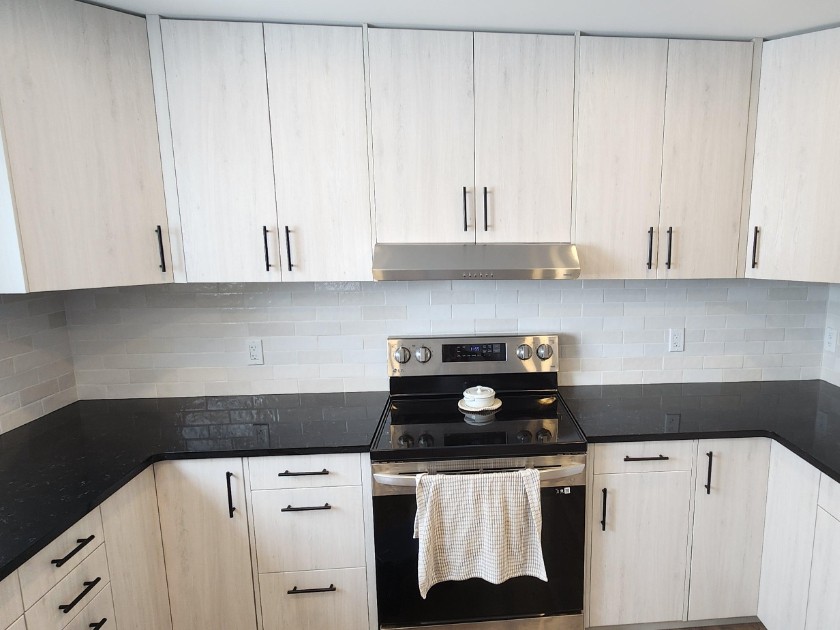
How Kitchen Cabinets Are Installed: Precision Behind the Finish
When you walk into a finished kitchen, you notice the cabinet colour, door style, and hardware. What you don’t see is the precision required to make those cabinets level, aligned, and fully functional. Cabinet installation is a structural task as much as a finishing one. If it isn’t done correctly, problems show up quickly - misaligned doors, uneven gaps, or drawers that don’t slide properly.
At Quality Homes & Renovations, cabinet installation starts long before the first box is lifted into place.
Establishing Level Lines
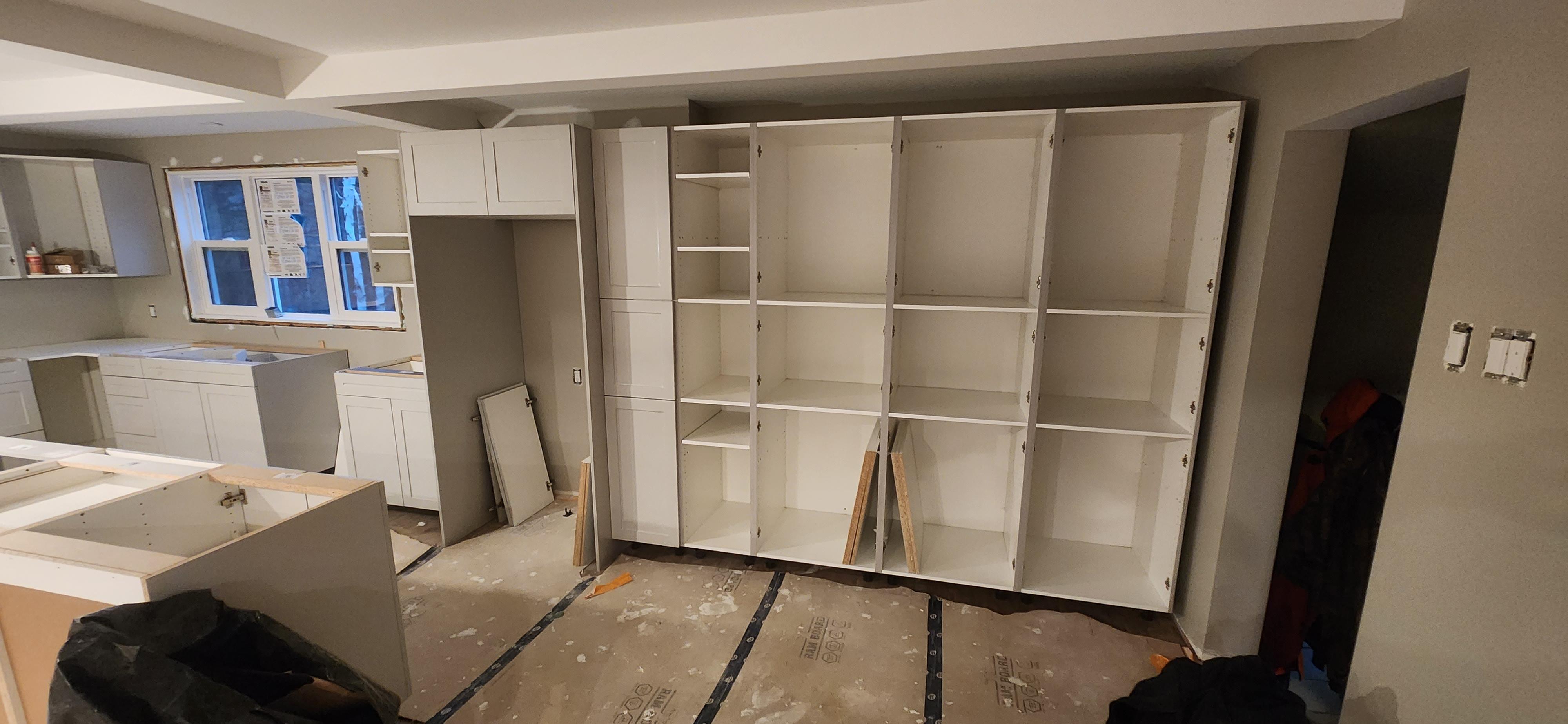
The first step is determining a true level reference line. Despite best efforts, even a new home has variances in the wall and floor. Using a laser level, we project a continuous level line around the room. This becomes the benchmark for both upper and lower cabinets.
We then check the floor for high and low spots. Base cabinets must sit level to properly support countertops and ensure doors and drawers operate correctly. If the floor varies, we use shims under the cabinet bases to correct the difference. The goal is simple: every cabinet must be perfectly level from end to end.
Locating Wall Studs
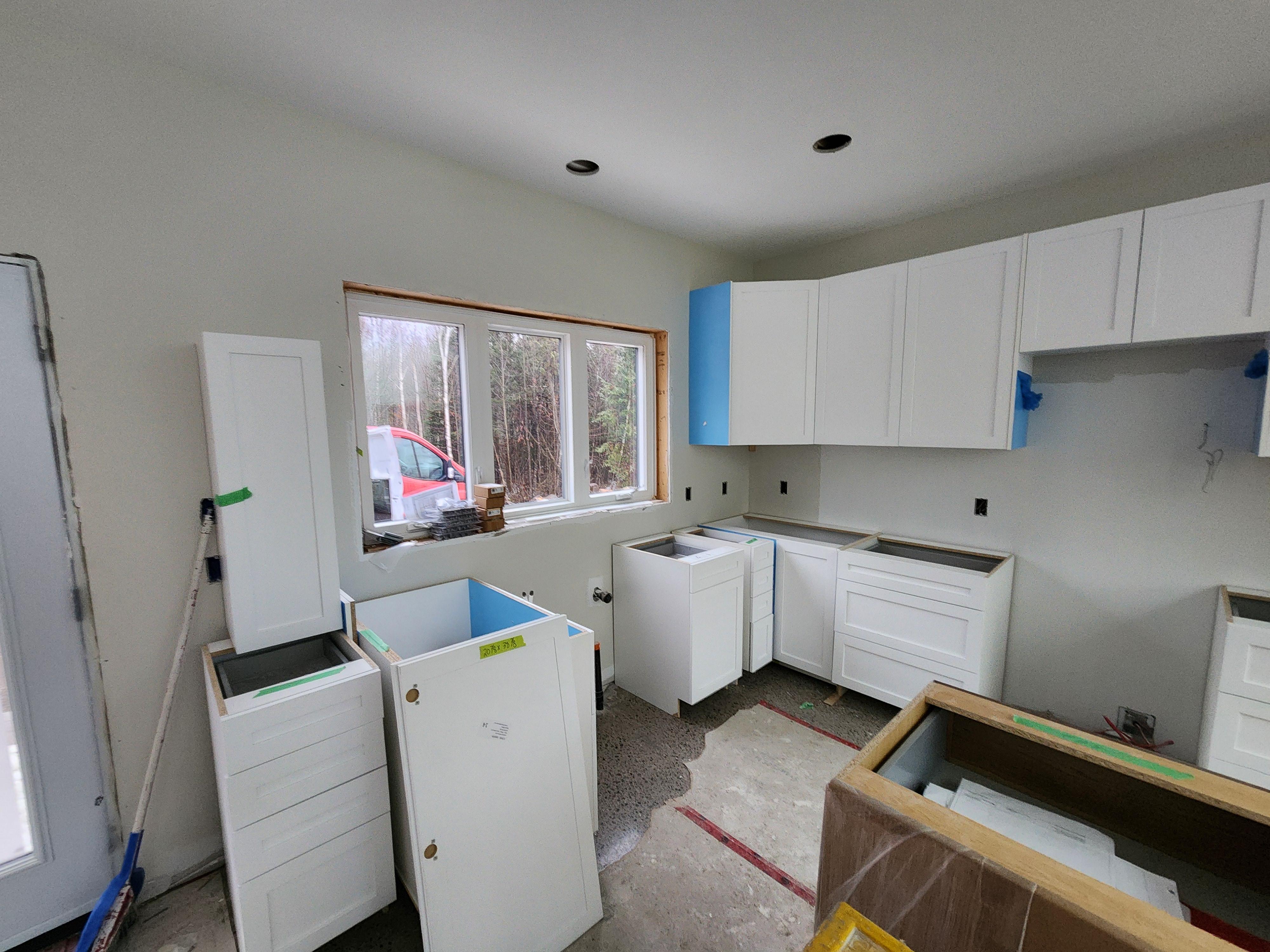
Cabinets carry significant weight once loaded. They must be fastened securely into wall framing, not just drywall. A stud finder is used to locate and mark every stud along the installation wall.
Upper cabinets are typically installed first. This avoids working over base cabinets and reduces the risk of damage. Each cabinet is lifted into position along the laser line and screws are driven through the cabinet backs directly into the wall studs. This creates a solid attachment that will not shift over time.
Base cabinets follow. Each unit is positioned, shimmed level and plumb, then fastened to the studs. Adjacent cabinets are clamped together and screwed through their sides so they function as one continuous run.
Keeping Cabinets Plumb and Square
Level alone is not enough. Cabinets must also be plumb (perfectly vertical) and square. Walls often bow slightly or sit out of alignment, especially in older homes. As each cabinet is installed, it is checked with a level to ensure it is not leaning forward or backward.
Corner cabinets, tall pantry units, and appliance openings require particular attention. Small alignment errors compound quickly across a run of cabinetry. Correcting them during installation prevents visible gaps or uneven spacing later.
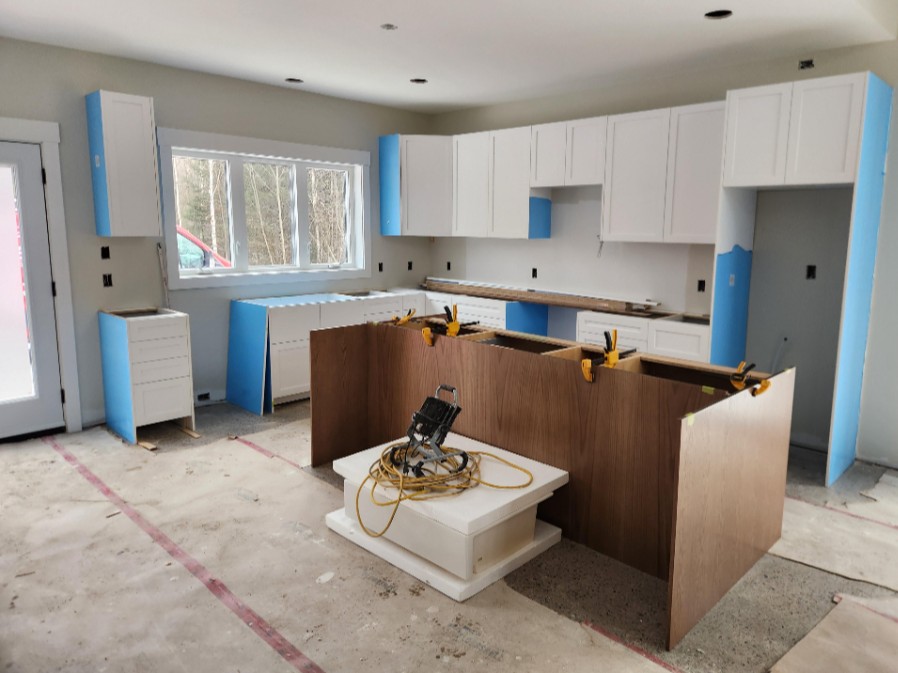
Securing for Countertops
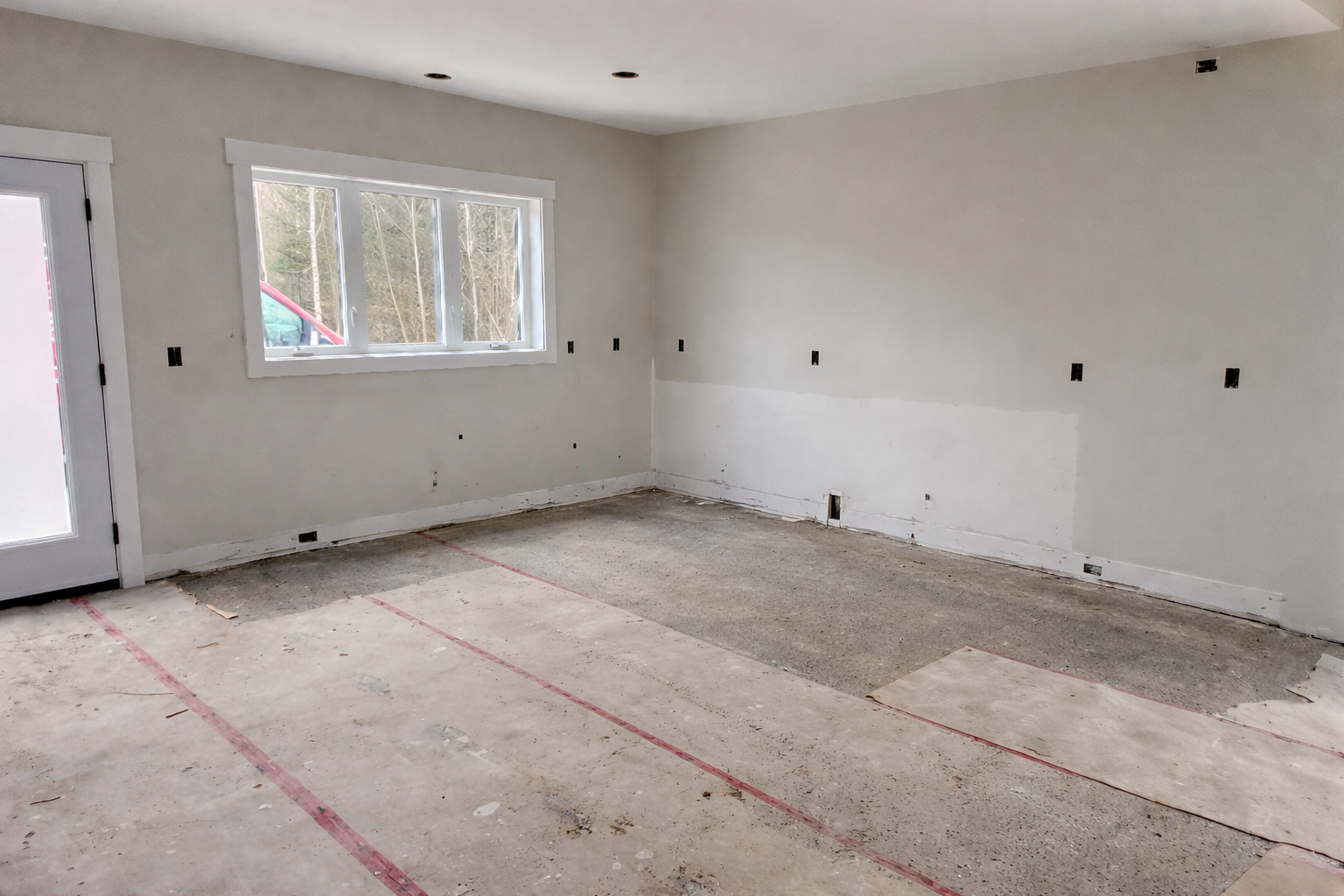
Before countertops are installed, we confirm that all base cabinets are level across their entire run. Even minor inconsistencies can affect countertop seams or create stress points. Proper leveling ensures stone, quartz, or laminate tops sit flat and are fully supported.
Adjusting Doors and Drawers
Once all cabinets are secured, the final phase is adjustment. Modern cabinet hinges allow for fine tuning in multiple directions. Each door is adjusted so spacing is consistent and edges align evenly.
Drawer fronts are aligned so gaps are uniform and parallel. Drawer slides are tested to ensure smooth operation without resistance. Soft-close hardware is checked for proper engagement.
These adjustments are not cosmetic details—they determine how the kitchen feels in daily use. Doors should close cleanly without rubbing. Drawers should glide without shifting.
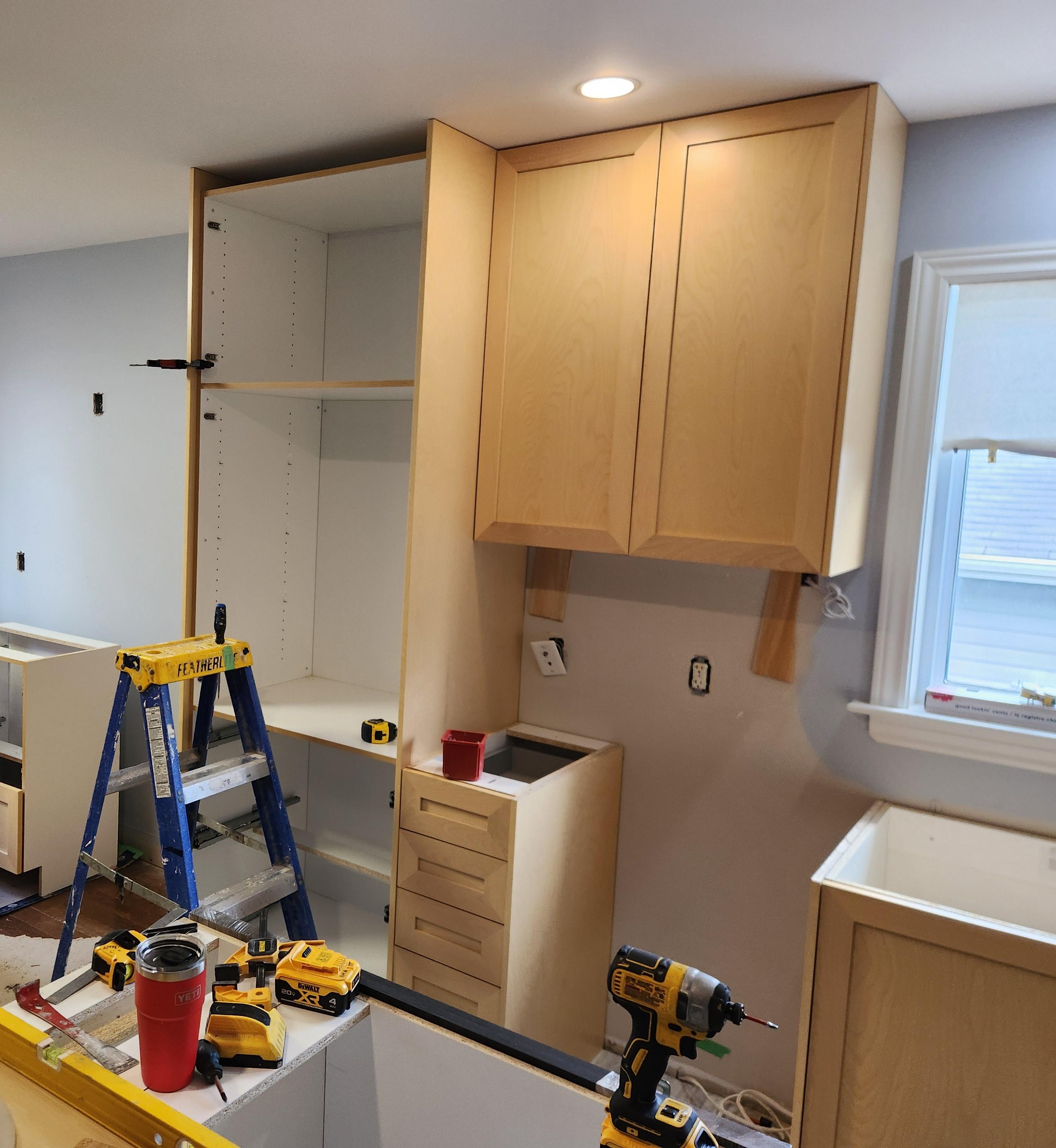
Final Checks
Filler strips, toe kicks, and trim pieces are installed after alignment is complete. All fasteners are rechecked. Every door and drawer is opened and closed multiple times to confirm proper function.
Built to Function Long Term
Cabinet installation is a precision process. The laser level ensures accuracy. The stud finder ensures structural attachment. Shimming ensures long-term stability. Adjustment ensures performance.
When cabinets are installed correctly, they stay aligned, operate smoothly, and properly support countertops for years. That is the standard we build to at Quality Homes & Renovations.

February 16th, 2026