Kitchen Design: Balancing the Triangle and Modern Efficiency
The kitchen is one of the most important spaces in a home. It’s where meals are prepared, families gather, and daily routines begin and end. Designing a kitchen that works well isn’t just about how it looks — it’s about how efficiently it functions. For decades, the “kitchen triangle” has been the standard approach to efficient design. While the triangle is still useful, modern layouts now consider how kitchens serve families in new ways. At Quality Homes & Renovations, we design kitchens to fit the space, the budget, and the way homeowners use them.
The Classic Kitchen Triangle
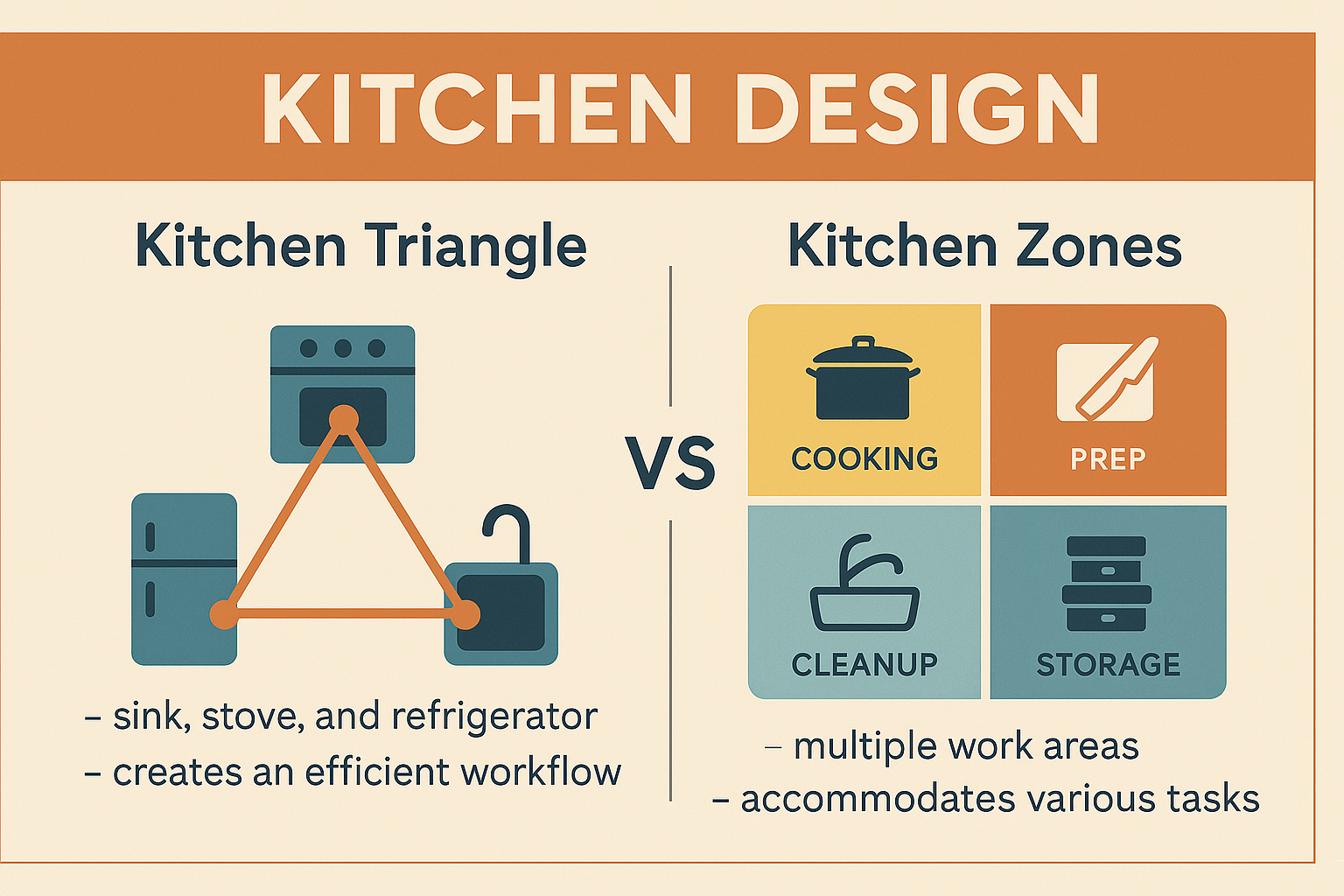
The kitchen triangle connects the sink, stove, and refrigerator, the three areas used most in meal preparation. The idea is simple: these three points should be close enough to move between easily, but not so close that the kitchen feels cramped. Typically, each side of the triangle is between four and nine feet, creating a comfortable workflow.
This approach works because most cooking tasks involve rinsing or cleaning at the sink, moving food to the prep area, cooking at the stove, and retrieving items from the fridge. By keeping these stations connected, the cook saves steps and avoids wasted motion. In smaller homes or compact kitchens, the triangle is still one of the most reliable ways to plan an efficient space.
The main advantage of the triangle is simplicity. It creates a clear, functional path for a single cook. When done well, it also reduces interference from foot traffic, since the main work zone is contained within the triangle. For homeowners who cook regularly, this classic design still provides a dependable foundation.
Modern Kitchens and the Shift to Zones
Today, kitchens are bigger and busier than they were when the triangle was first introduced. They’re not just cooking spaces — they’re places where families do homework, guests gather, and meals are shared. With multiple people using the space at once, the triangle alone doesn’t always cover every need.
That’s where kitchen “zones” come in. Instead of focusing only on three points, modern designs divide the kitchen into areas: prep, cooking, cleanup, and storage. Each zone has the tools and appliances needed for its specific task. For example, prep zones keep knives, cutting boards, and mixing bowls close at hand. Cooking zones are centered on the stove or cooktop, with pots, pans, and utensils nearby. Cleanup zones include sinks, dishwashers, and space for drying or storing dishes. Storage zones hold pantry items, dry goods, or even a second fridge or freezer.
This approach makes it easier for more than one person to use the kitchen at the same time without bumping into each other. It also reflects the reality of modern households, where kitchens do more than just provide a place to cook.
The Role of Islands and Peninsulas
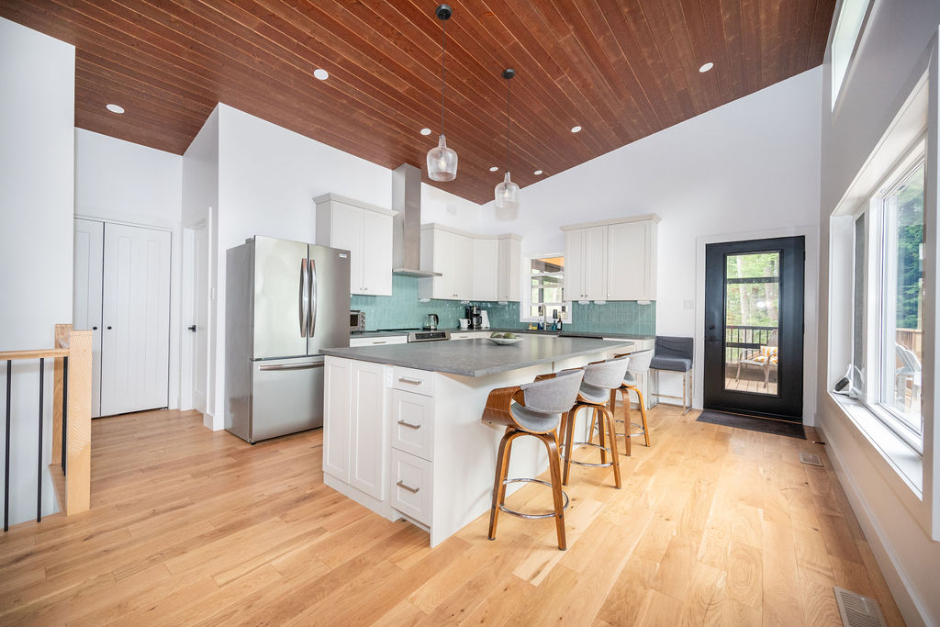
Kitchen islands have changed the way layouts are planned. An island can hold a sink, cooktop, or prep space, creating new “mini-triangles” within the larger design. They also serve as multi-purpose areas for serving food, casual dining, or even working on homework. Peninsulas can offer similar advantages in smaller spaces where a freestanding island isn’t practical.
At Quality Homes & Renovations, we look closely at each home’s footprint to determine whether an island, peninsula, or galley layout will deliver the best use of space. The goal is always to maximize efficiency while making the kitchen a natural gathering place.
Storage and Traffic Flow
Good storage is essential to an efficient kitchen. Pull-out drawers, tall pantry units, and custom inserts for utensils and spices keep everything organized and easy to reach. We design storage so that every zone has what it needs without constant trips across the kitchen.
Traffic flow is just as important. In open-concept homes, kitchens connect directly to dining and living spaces. We plan clear pathways so people can move through the kitchen without cutting across the cook’s main workspace. This ensures the kitchen works well as both a functional space and a social hub.
Designing for the Homeowner
Every homeowner has different needs. Some prioritize entertaining, others want extra storage, and many need durable finishes for busy families. At Quality Homes & Renovations, we tailor each design to the space and the people using it. In smaller kitchens, we often rely on the classic triangle for efficiency. In larger kitchens, we combine triangle principles with zoning to support multiple cooks and activities. The design always fits the home, the budget, and the lifestyle of the owner.
A well-designed kitchen makes daily life easier and more comfortable. The classic triangle keeps essential tasks efficient, while zoning and modern layouts allow for flexibility in larger and busier homes. At Quality Homes & Renovations, we don’t use a one-size-fits-all approach. We design kitchens that reflect the space available, the homeowner’s needs, and the way the family actually lives. The result is a kitchen that’s efficient, welcoming, and truly the heart of the home.

December 22nd, 2025