Interior Paint: What’s in It, How It’s Made, and How It Gets on the Wall
Painting is often one of the final steps in building or renovating a home. It’s the stage that takes blank drywall and turns it into a finished room. While most people focus on the colour, there’s a lot more to interior paint than meets the eye. Understanding what it’s made of, how it’s manufactured, and how it’s properly applied gives you a better sense of why a good paint job lasts and a poor one doesn’t.
What’s in Interior Paint
Interior paint is a mixture of four main ingredients: pigments, binders, solvents, and additives. Each one has a job to do.
Pigments are what provide colour and coverage. They can be natural or synthetic and are ground into a fine powder. White pigment, usually made from titanium dioxide, gives paint its hiding power so that the colour beneath doesn’t show through.
Binders are the “glue” that hold everything together and form the actual paint film once it dries. For interior paints, this is usually an acrylic or latex binder. Binders also determine how durable and washable the paint will be.
Solvents are the liquid portion that keeps the paint spreadable. In water-based paints (which are now the standard for interiors), the solvent is mostly water. As the paint dries, the water evaporates and leaves the pigment and binder behind on the wall.
Finally, additives are mixed in to improve performance. These might control how quickly the paint dries, resist mould growth, or keep the colour from fading in sunlight. While they only make up a small portion of the paint, they can make a big difference in how it performs in the long run.
How Paint Is Made
The manufacturing process for interior paint is designed to blend these ingredients into a smooth, consistent product. Pigments are first dispersed into the binder using high-speed mixers. This ensures the colour is even and that the pigment particles are fully coated with the binder. Water and additives are then added to adjust the thickness, drying time, and finish.
The paint is tested at several stages for colour accuracy, coverage, and viscosity. Once everything meets specification, it’s packaged in cans and ready for shipping. Even though paint is a relatively inexpensive finish compared to flooring or cabinetry, there’s a surprising amount of science and quality control that goes into each gallon.
The old saying, “you get what you pay for’ is especially true with paint. At Quality Homes & Renovations, we use high quality paint to make sure it looks great and lasts.
Applying Interior Paint
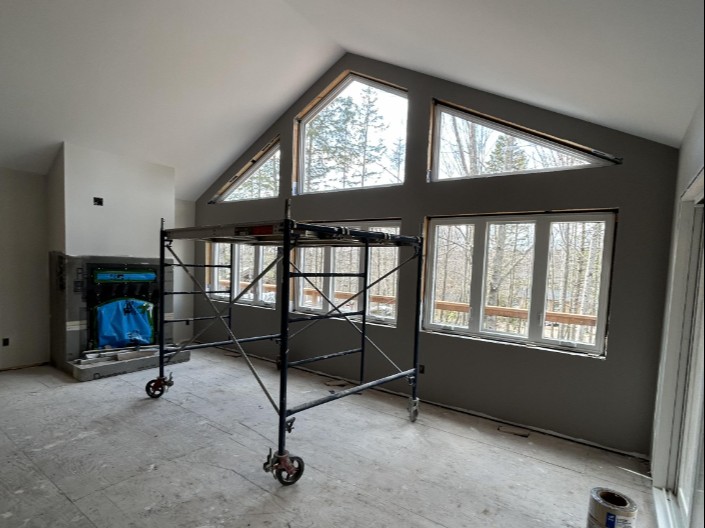
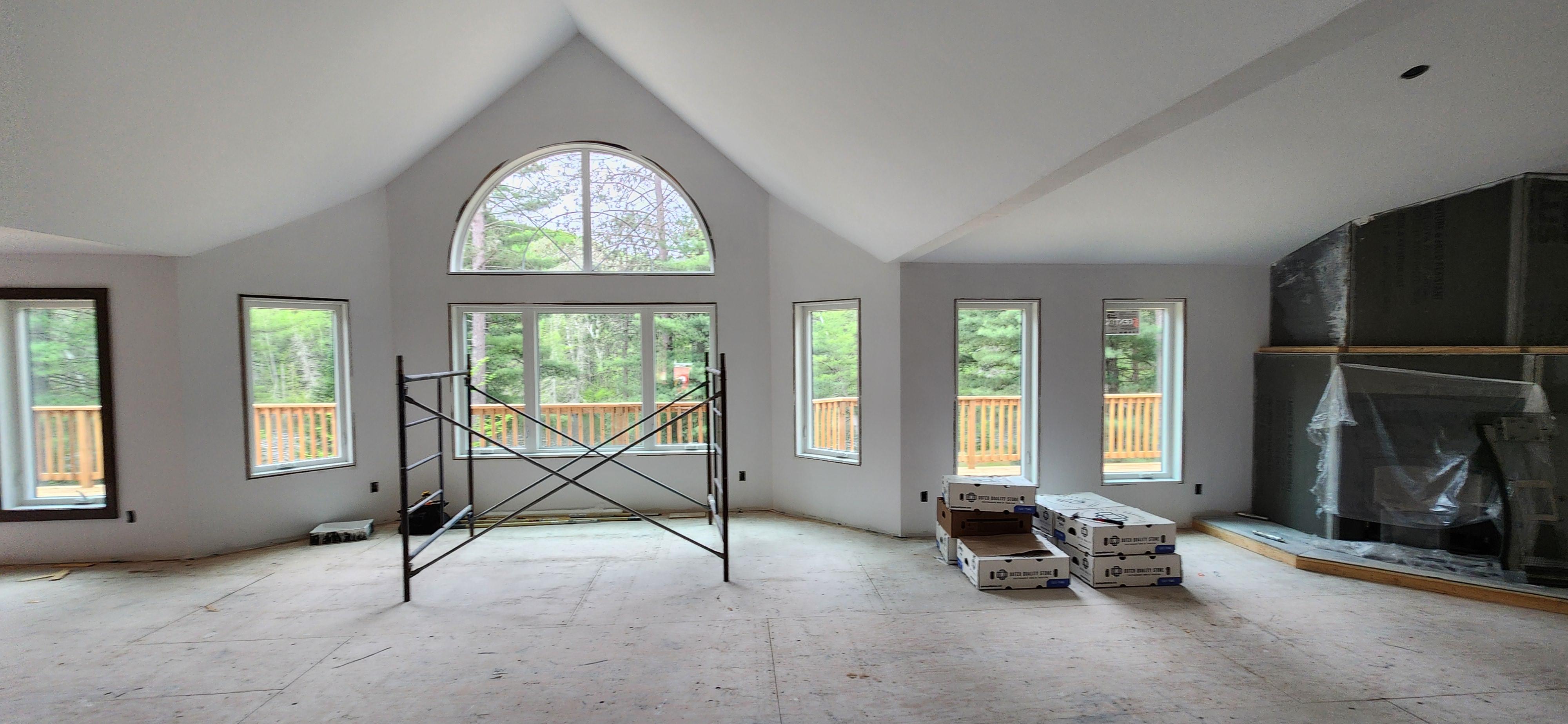
On site, the first step before applying any paint is preparation. Drywall is sanded smooth, dust is cleaned off, and a primer is applied. Primer is essential when painting new drywall because it seals the porous surface and creates a uniform base for the finish coat. Raw drywall and joint compound absorb paint at different rates, which can lead to uneven sheen and blotchy results if primer is skipped. A quality drywall primer evens out the surface, allowing the finish paint to adhere properly and cover consistently. Skipping primer can lead to blotchy results, especially on fresh drywall.
Once primed, paint can be applied by brush, roller, or sprayer. In most residential projects, rollers are the go-to for walls, while brushes are used for cutting in at edges and around trim. Sprayers are sometimes used on larger jobs, though they require more masking and protection of surrounding surfaces.
Two finish coats are typically applied for full coverage and colour depth. Between coats, the walls are checked for imperfections, which can be touched up with a light sanding or spot priming. When done carefully, the result is a smooth, uniform surface that highlights the colour chosen by the homeowner.

The choice of sheen also matters. Flat or matte paints hide surface imperfections well but aren’t easy to wash, so they’re common on ceilings. Eggshell and satin finishes are popular on walls because they balance washability with a softer look. Semi-gloss or gloss paints are used on trim and doors where more durability is needed.
Bringing It All Together
Interior paint is one of the most visible finishes in a home, but it relies on more than just the colour chip picked at the store. The combination of pigments, binders, solvents, and additives, along with the care taken during application, all determine how the finished walls will look and last. A well-applied paint job ties everything together into a clean, comfortable space that feels complete.

October 13th, 2025