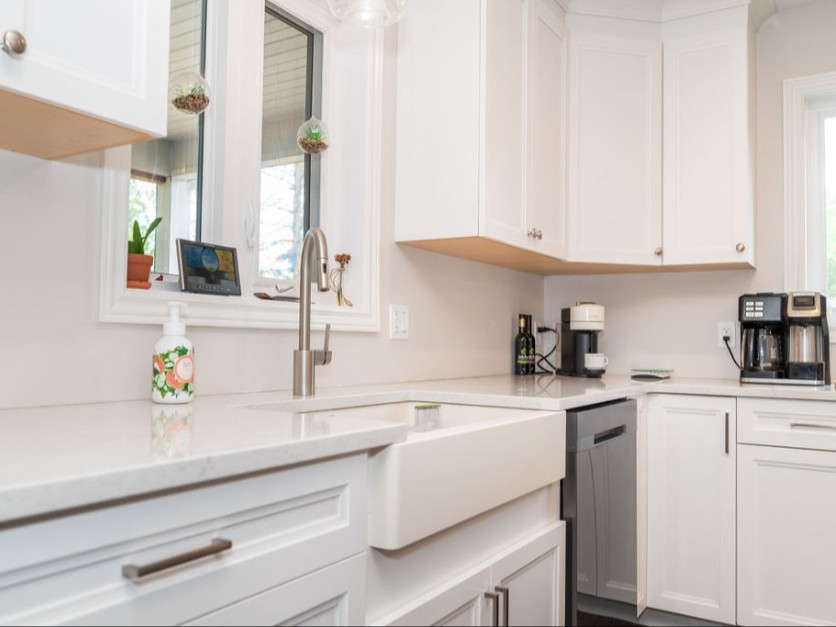
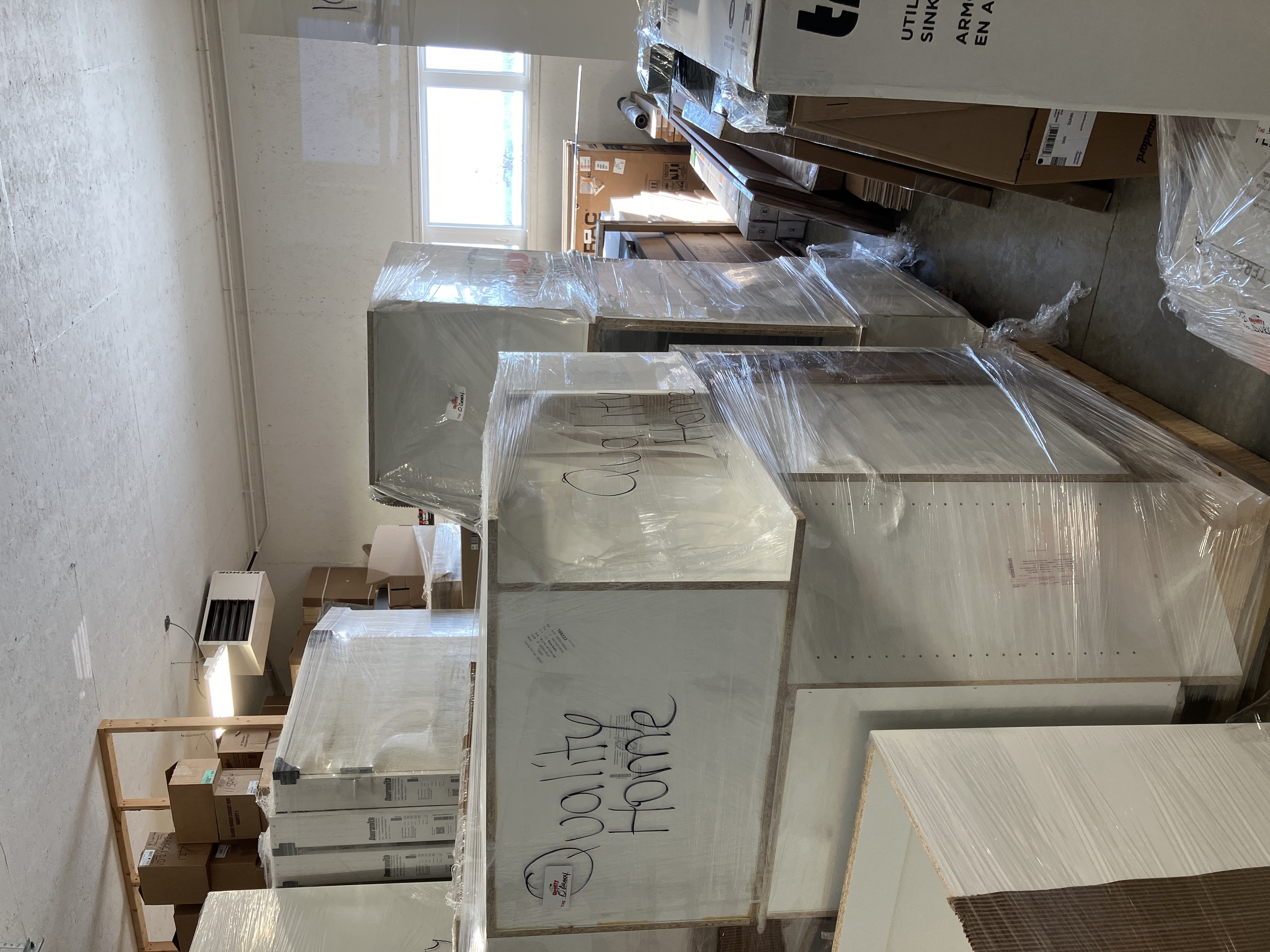
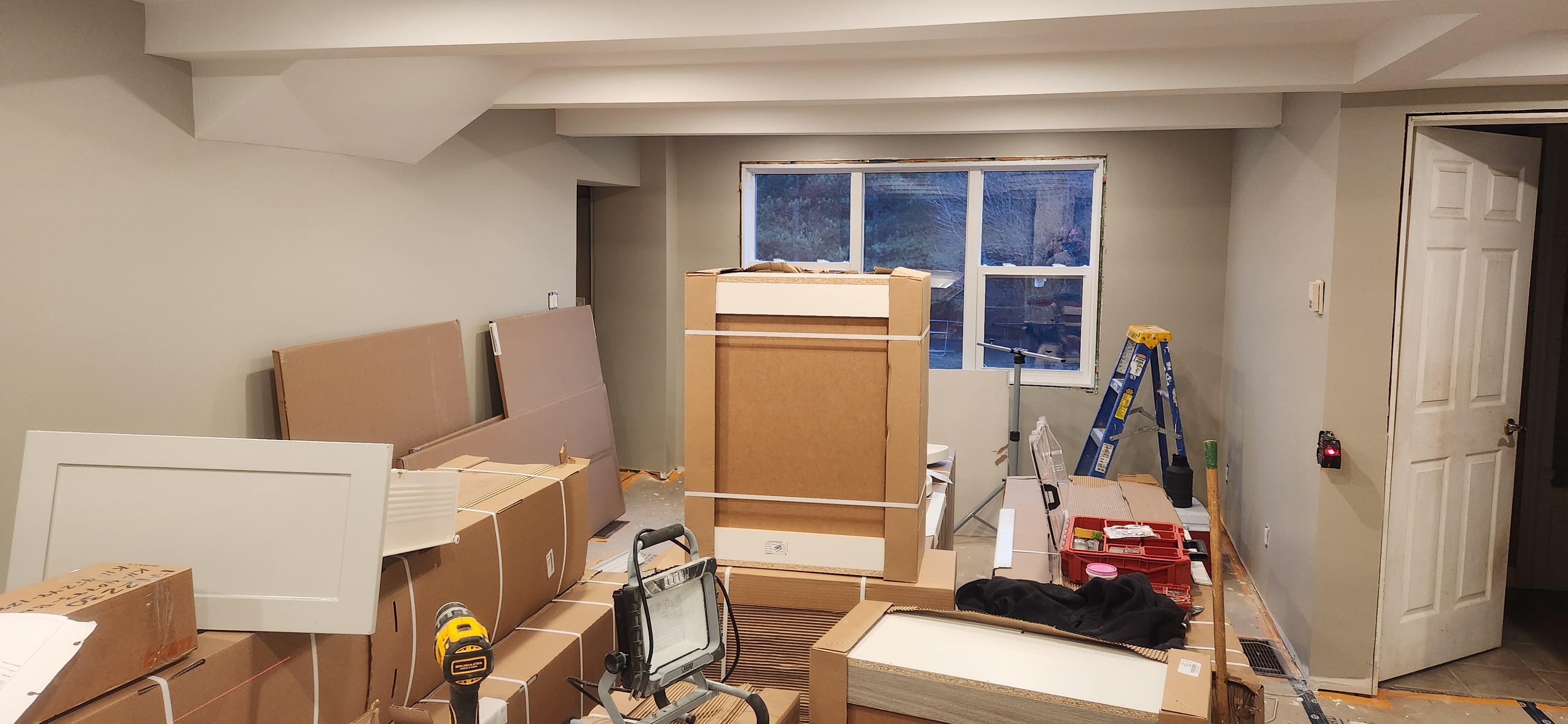
What is this pile of parts?
When cabinets arrive, it can look like a pile of parts—boxes, trim pieces, panels, and moldings. Each piece has a purpose. Once installed correctly, they work together to make the kitchen look finished and function properly. Here’s a practical breakdown of what each component does.
Toe Kicks
The toe kick is the recessed strip at the bottom of base cabinets. It gives you space for your feet so you can stand comfortably at the counter without leaning forward.
It also hides the cabinet legs and any shims used to level the cabinets on uneven floors. After installation, a finished toe kick panel is attached across the entire run of base cabinets. This creates a clean, continuous base and covers any gaps underneath.
End Panels & Dishwasher Panels
When the side of a cabinet is visible—such as the end of a cabinet run or the side of an island—that surface needs to be finished. Cabinet boxes are not designed to be exposed. End panels cover those raw sides and match the door style and colour.
On islands especially, end panels are important because the island is visible from multiple angles. In some cases, panels extend all the way to the floor for a more built-in, furniture-style look.
A dishwasher creates a break in the cabinet run, so a dishwasher panel is installed on each side of the appliance opening. It does two things: supports the countertop above and maintains consistent spacing between the dishwasher and adjacent cabinets.
If desired, a custom panel can be attached to the dishwasher door so it visually blends in with surrounding cabinets.
False Drawer Fronts and False Doors
Not every space in a kitchen can be used for storage. For example, under the sink, plumbing prevents the top drawer from functioning. Instead, a false drawer front is installed to match the working drawers beside it.
These pieces do not open. Their purpose is to maintain consistent spacing and keep the cabinet faces looking uniform.
You may also see false doors used in place of flat panels. This is an aesthetic choice and can help the layout look clean and consistent, even when the space behind them isn’t usable.
Valances and Light Rails
Installed under upper cabinets, these trim pieces serve a practical purpose.
Light rails hide under-cabinet lighting fixtures and wiring so they aren’t visible when you’re standing in the kitchen. Valances can also soften the transition between cabinets and backsplash. While subtle, they prevent exposed lighting hardware and give the upper cabinets a finished edge.
Why These Pieces Matter
Cabinet doors and drawers get most of the attention, but the supporting components are what make everything look complete.
- Toe kicks create comfort and hide leveling adjustments.
- End panels cover exposed cabinet sides.
- Dishwasher panels provide structural support and clean spacing.
- False fronts maintain consistent cabinet faces.
- Light rails conceal lighting and wiring.
Once installed, these details eliminate visible gaps, raw edges, and awkward transitions. The result is a kitchen that looks intentional and finished from every angle.
At Quality Homes & Renovations, cabinet installation is treated as a full system—not just a set of boxes and doors. It’s the careful installation of every supporting piece that makes the difference between cabinets that are simply installed and a kitchen that truly feels complete.

March 2nd, 2026