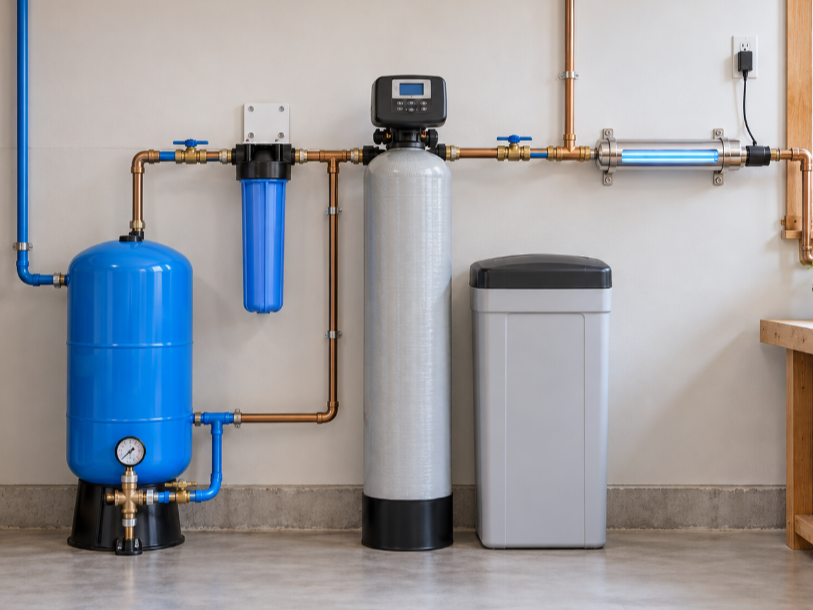
Well & Water Systems Part III: Iron, Sulphur, Manganese & UV Treatment
In the first two parts of our well and water series, we looked at how a drilled well works, how water is pumped into the home, and how sediment filters and water softeners deal with some of the most common issues found in rural water systems.
But sometimes the problems are a little more obvious. Orange stains appear in the bathtub. The water smells like rotten eggs. Dark staining develops around plumbing fixtures. Or a water test shows bacteria even though the water looks perfectly clear.
These issues are common with private wells, but there is no single filter that fixes everything. The important first step is identifying exactly what is in the water and then selecting treatment equipment designed to solve that particular problem.
Iron in Well Water
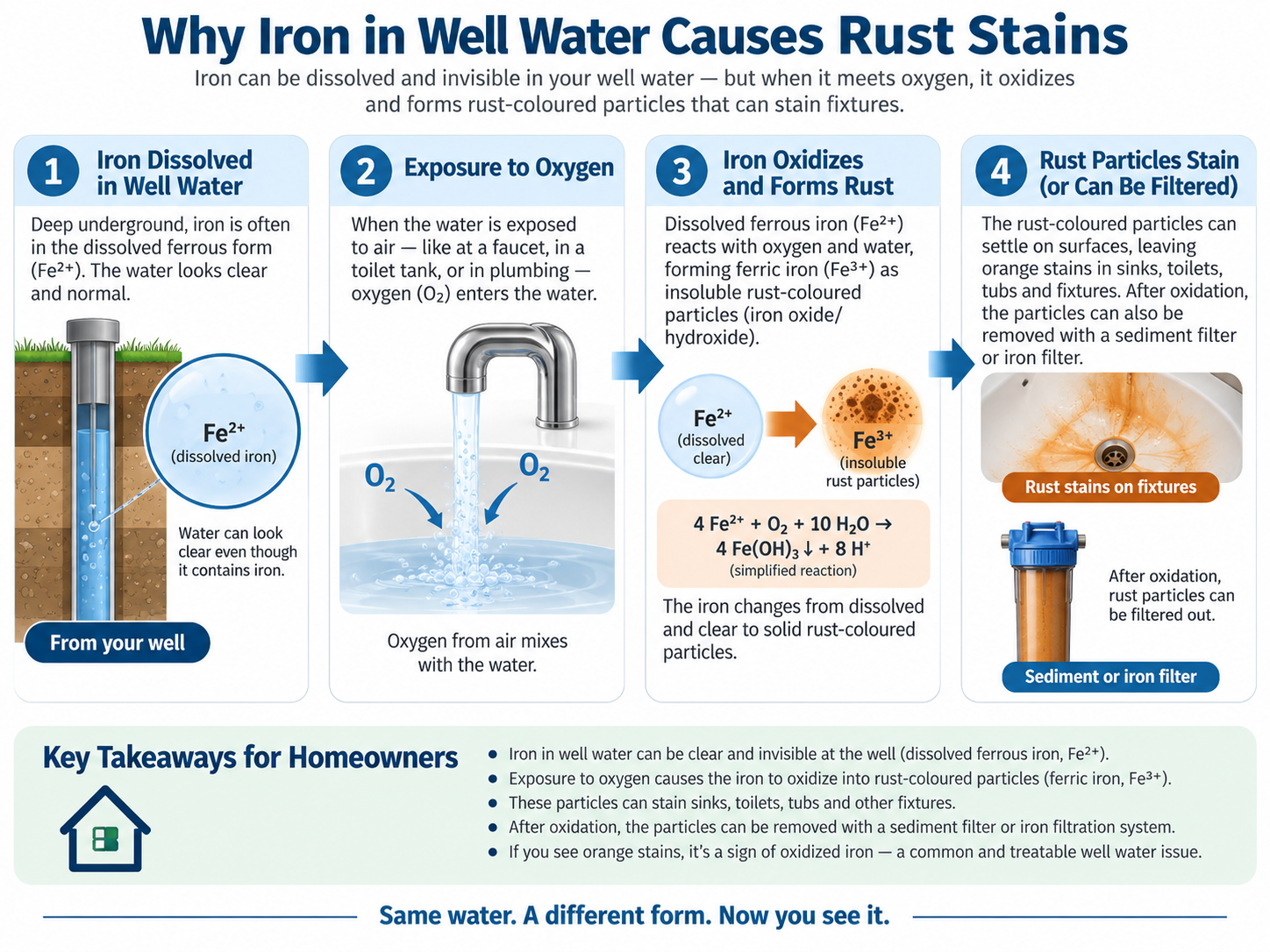
Iron is one of the most recognizable well-water problems. The water may come out of the tap completely clear, but after sitting for a while it begins turning yellow or orange. Rust-coloured stains can develop around toilets, sinks, tubs and showers. White laundry may start taking on a yellowish colour. This happens because some iron is dissolved in the groundwater. Once the water is exposed to oxygen, the dissolved iron oxidizes and forms the familiar rust-coloured particles.
A basic sediment filter may catch some iron once it has oxidized into particles, but it will not necessarily remove dissolved iron before that happens. Depending on the type and concentration of iron, treatment may involve an iron-removal filter that oxidizes the iron and then traps it in a filter media. The system periodically backwashes itself to flush the accumulated iron out. Some water softeners can also remove smaller amounts of dissolved iron, but a softener should not automatically be considered an iron filter. Heavy iron concentrations can foul the softener resin and create additional maintenance problems. The water test determines which system makes sense.
What Causes the Rotten-Egg Smell?
Another well-water complaint that is impossible to ignore is the smell of rotten eggs. This is usually associated with hydrogen sulphide gas. Hydrogen sulphide can occur naturally in groundwater as sulphur compounds break down. Certain bacteria can also contribute to the problem. Sometimes the smell is present throughout the entire plumbing system. In other cases, homeowners notice it only when using hot water.
That distinction is useful. If both hot and cold water smell, the source is more likely the well water itself. If the smell only appears in the hot water, the water heater may be contributing to the problem through reactions involving the water, bacteria and the heater's sacrificial anode rod. Treatment for sulphur water can involve aeration, oxidation and filtration. Essentially, the dissolved gas or sulphur compounds are converted into a form that can be removed from the water. Again, testing comes before buying equipment. A rotten-egg smell tells you there is a problem, but not necessarily exactly what is causing it.
Manganese
Manganese is another naturally occurring mineral that can be present in groundwater. While iron generally leaves orange or reddish stains, manganese often creates brown, grey or black staining. You may see dark marks inside toilet tanks, around faucets or on plumbing fixtures. Laundry can also become stained. Iron and manganese frequently occur together, so treatment equipment is often designed to remove both. Oxidation followed by filtration is a common approach.
These systems usually contain a filter tank with specialized media. The contaminants are trapped in the media and periodically flushed away during an automatic backwash cycle. This is another reason the mechanical room of a rural home can become more complicated than expected. What begins as a pressure tank and water heater can eventually include sediment filters, a softener, an iron filter and other treatment equipment depending on the quality of the well water.
What Does a UV System Do?
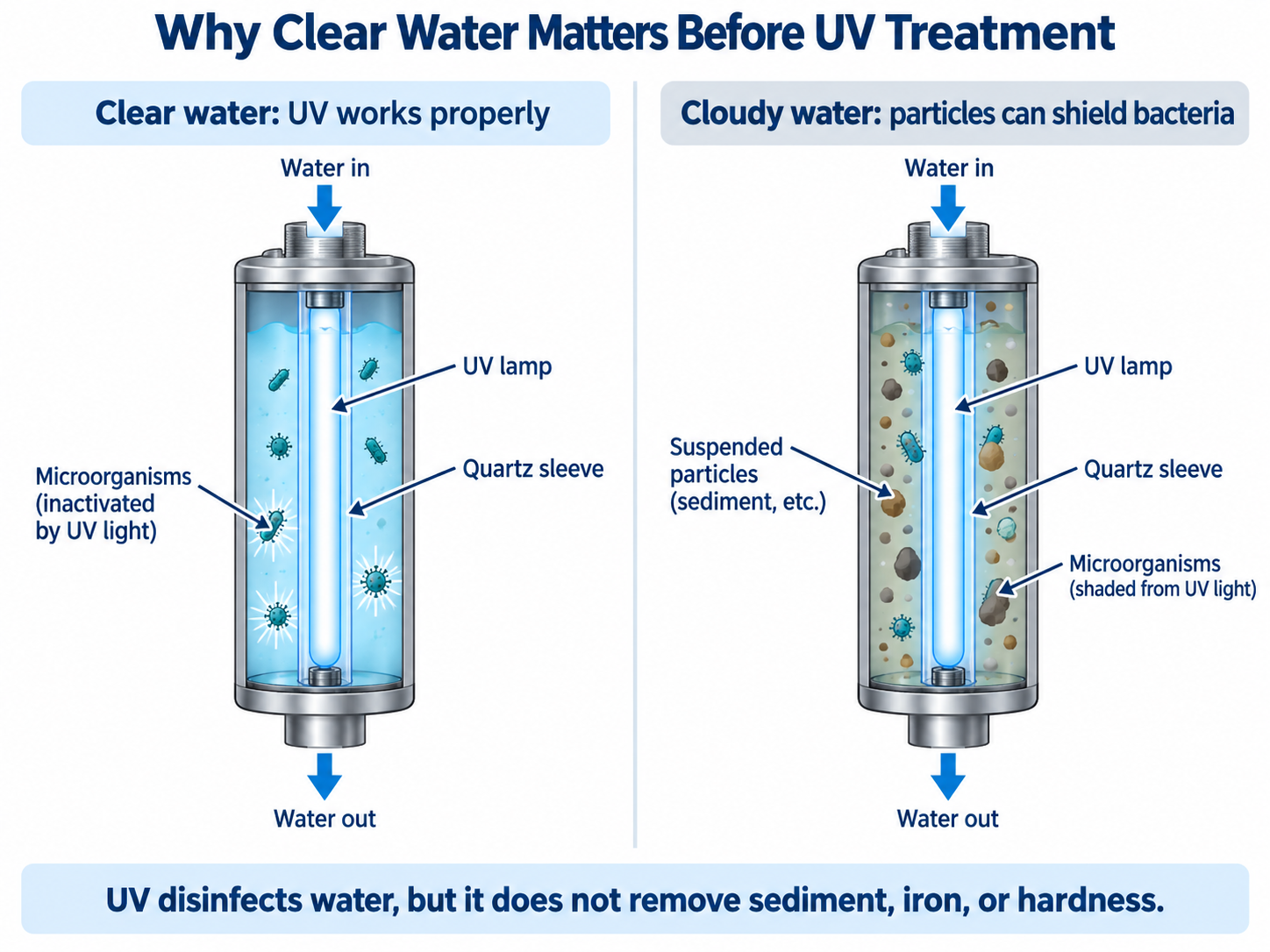
A UV, or ultraviolet, water treatment system addresses a completely different concern: microorganisms. UV systems use an ultraviolet lamp mounted inside a chamber through which the household water passes. The ultraviolet light damages the genetic material of bacteria and other microorganisms so they can no longer reproduce. Unlike chemical treatment, UV does not normally add anything to the water or change its taste. But a UV system does not remove sediment, hardness, iron or other minerals. It has one specific job: disinfecting the water.
The water also needs to be reasonably clear before entering the UV chamber. Heavy sediment, iron or other material can shield microorganisms from the ultraviolet light. That is why UV equipment is normally installed after the appropriate filtration equipment. The UV lamp also requires maintenance. Lamps gradually lose their effectiveness and need periodic replacement, and the quartz sleeve surrounding the lamp must remain clean so the light can pass through properly.
Sometimes the Well Itself Needs Attention
Not every water-quality problem should be solved by adding another piece of equipment.
If bacterial testing repeatedly comes back positive, the cause should be investigated. A damaged well cap, improperly sealed casing, surface drainage toward the well or another defect may be allowing contaminated surface water into the system. A well can also be disinfected or “shocked” with chlorine following certain contamination events or servicing.
Treatment equipment is valuable, but it should not be used to hide a problem with the well itself.
Test First, Treat Second
The common thread through all three parts of this series is that every well is different. Iron needs one treatment method. Hardness needs another. Sediment can usually be filtered mechanically, while bacteria may require disinfection. A sulphur smell needs to be properly diagnosed before equipment is selected.
The best water system is therefore not the one with the most tanks and filters in the mechanical room. It is the simplest system that properly treats the water coming from your particular well. Start with good testing, understand the results, install the appropriate equipment and maintain it properly. Done correctly, a private well can provide excellent water for your home for decades.
October 12th, 2026