Well & Water Systems Part IV: Maintaining Your Well and Water System
A private well system is one of those parts of a rural home that works quietly in the background. When everything is operating properly, you turn on a tap and water appears at good pressure without much thought.
But like any mechanical system, it does need some maintenance. The good news is that most well systems are fairly simple. A little routine attention to filters, softeners, pressure equipment and water testing can prevent larger problems and help the system last for many years.
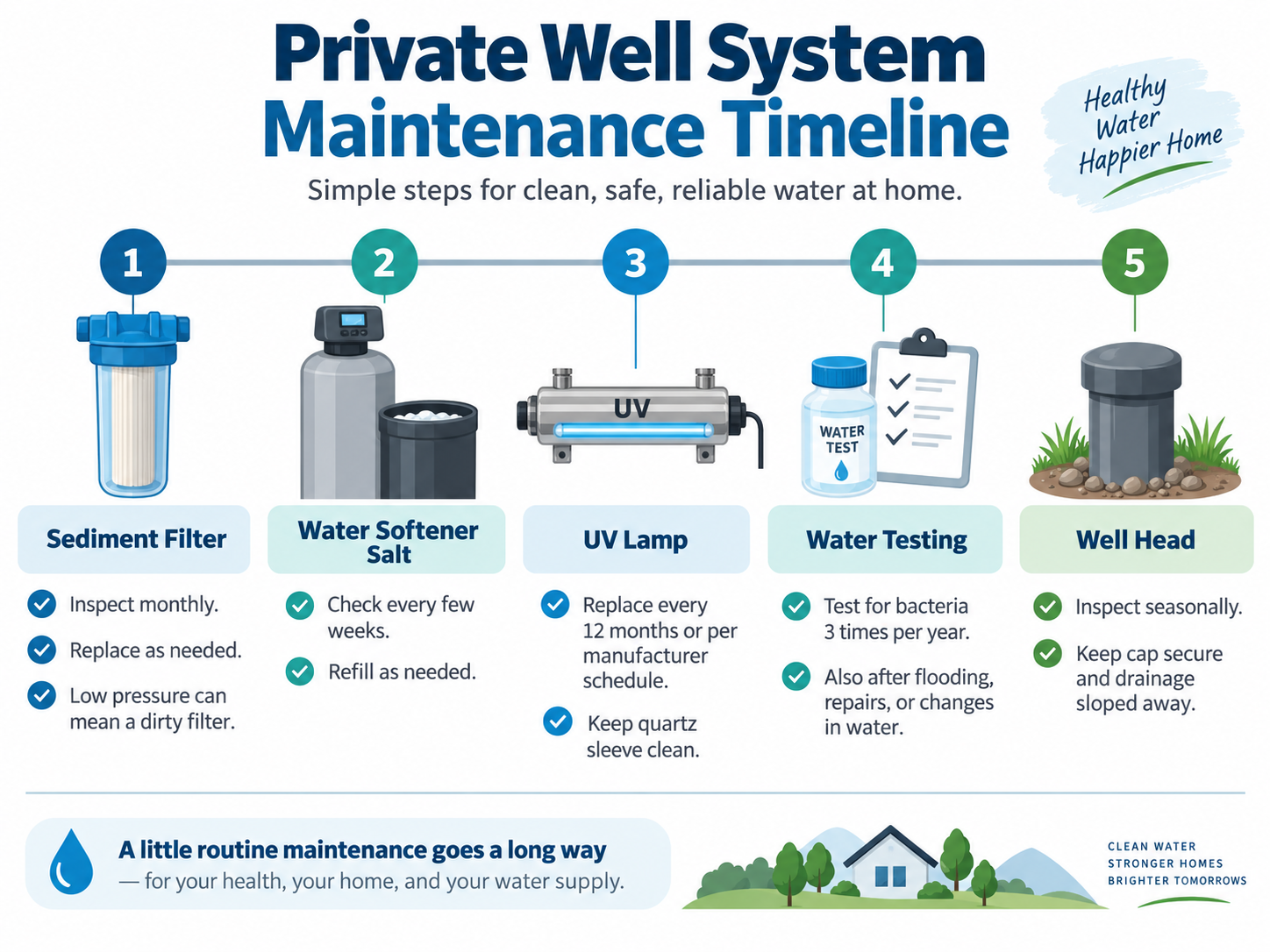
Change Your Sediment Filters
If your home has a sediment filter, this is probably the most frequent maintenance item. The cartridge collects sand, silt, rust and other small particles before they enter the rest of the plumbing system. As the filter becomes dirty, it gradually restricts water flow. One of the first signs of a plugged filter is lower water pressure. The shower may feel weaker than normal, or the washing machine may take longer to fill.
How often the filter needs to be changed depends entirely on the well. Some homeowners may get months out of a cartridge, while a well that produces more sediment may require replacement much more often. It is worth keeping a few spare filters in the mechanical room. They are inexpensive, and changing one can quickly solve what otherwise looks like a larger plumbing problem.
Keep Salt in the Water Softener
If you have hard water and a softener, the brine tank needs to stay supplied with salt. The softener uses that salt during its regeneration cycle to clean the resin inside the treatment tank. If the salt runs out, the softener cannot regenerate properly and hard water begins passing through the system again. You may notice soap no longer lathers as well, white spotting returns to fixtures, or scale starts appearing around faucets.
Checking the salt level every few weeks is usually enough. The tank does not need to be filled right to the top, but it should never be allowed to sit empty for long periods. Occasionally the salt can also form a hard crust or "bridge" inside the tank. It may look full from the top even though there is an empty space underneath. Breaking up the bridge restores proper operation.
Maintain UV Equipment
If your water system uses ultraviolet disinfection, the UV unit requires regular maintenance. The lamp may still appear to be glowing after a long period of use, but that does not mean it is producing enough ultraviolet energy to disinfect the water properly. UV lamps need to be replaced according to the manufacturer's recommended schedule.
There is also a quartz sleeve around the lamp that keeps it separated from the water. Minerals and deposits can build up on this sleeve and reduce the amount of UV light reaching the water. The sleeve should be inspected and cleaned periodically. Remember that a UV system can only treat water effectively if the water reaching it is reasonably clear. Sediment filters and other treatment equipment upstream of the UV unit need to be maintained as well.
Pay Attention to Pump Cycling
A healthy well system should not have the pump starting and stopping every few seconds. If you hear the pressure switch clicking repeatedly while someone is using water, the pump may be "short cycling." This can happen if the pressure tank has lost its proper air charge, if the internal bladder has failed, or if there is another problem in the pressure system.
Short cycling is hard on a submersible pump. Electric motors experience their greatest stress when starting, so constant starts and stops can reduce pump life considerably. A properly functioning pressure tank allows the system to use a reasonable amount of water between pump cycles. If the pump suddenly begins cycling much more often than normal, it is worth having the system inspected before the pump itself is damaged.
Watch for Changes in Pressure
Changes in water pressure are often one of the first clues that something is not right. Low pressure can be caused by a dirty sediment filter, a failing pressure tank, an incorrectly adjusted pressure switch, a plumbing restriction or an issue with the pump.
If the pressure gauge is working properly, it can provide useful information. On a typical 40/60 system, the pump should start around 40 PSI and shut off around 60 PSI. If the pressure never reaches the shutoff point, drops unusually quickly, or behaves differently than it normally does, the system should be checked.
Inspect the Well Head
The top of the well casing is easy to forget because it is usually somewhere out in the yard. Take a look at it occasionally.
The well cap should be secure and undamaged. The casing should extend above the surrounding grade and the ground should slope away from it so rainwater and snowmelt do not collect around the well. Avoid piling soil, firewood or landscaping material against the casing. Surface water should never be encouraged to drain toward the well.Any damage to the well cap or casing should be repaired promptly.
Test the Water Regularly
Water testing is one of the simplest and most important pieces of well maintenance. Even if the water looks, smells and tastes exactly the same as it always has, bacteria can still be present. Testing should be part of the homeowner's normal routine, especially after flooding, well repairs, plumbing work or any unexplained change in water quality. If a test comes back with a problem, do not simply assume another filter is required. The cause should be investigated first.
Know What Is Normal
One of the best maintenance tools is simply knowing how your own system normally behaves. Know how often you change the sediment filter. Know approximately how much softener salt you use. Know how the pump sounds, what the normal water pressure feels like and whether there are any usual tastes or smells in the water. When something changes, you will notice it quickly.
A well system does not require constant attention, but ignoring small warning signs can turn simple maintenance into an expensive repair. With regular testing, clean filters, properly maintained treatment equipment and a healthy pressure system, your private well can provide reliable water for decades — which is exactly what it was designed to do.
October 26th, 2026